
Introduction
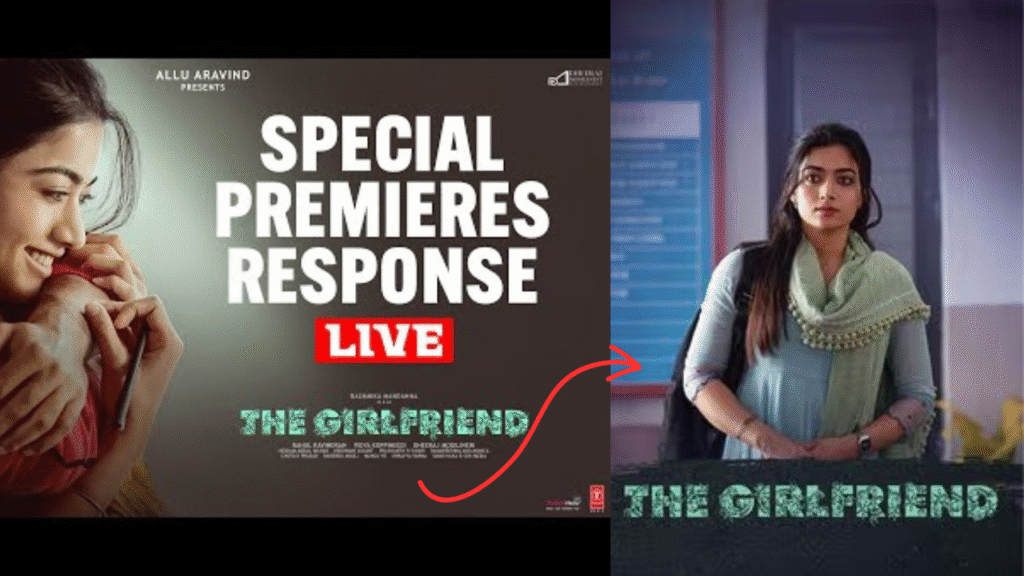
Films often reflect more than romance on the surface — they mirror internal struggles, societal dynamics, identity questions. The Telugu-language film The Girlfriend (2025) is such a work: while on the surface a romance, it digs into power, control, self-identity and the contemporary relationship of young adults. In this article, we offer a deep dive into everything you need to know about The Girlfriend: its genesis, cast & crew, plot and characters, production details, thematic substance, release and reception, and its place in modern Indian cinema.
From a production point of view, the film arrives as part of a wave of Telugu movies in the early 2020s exploring more mature relationship issues, targeted at younger audiences who seek substance as well as entertainment.
Key cast and characters of The Girlfriend include:
- Anu Emmanuel as Durga — Bhooma’s friend, whose role supports the female lead’s arc in terms of friendship, trust, and personal growth.
- Rao Ramesh as Bhooma’s father — representing the parental / control dynamic in the story
- Other supporting cast include Rohini Molleti (as Vikram’s mother) and Rahul Ravindran himself in a cameo or supporting role as Prof. Sudheer (HOD) in the film.
This ensemble sets up the interpersonal landscape: student life, budding romance, friendship, family relationships, and the broader social and emotional pressures on young women in such contexts.
While avoiding major spoilers, here is a summary of the storyline of The Girlfriend.
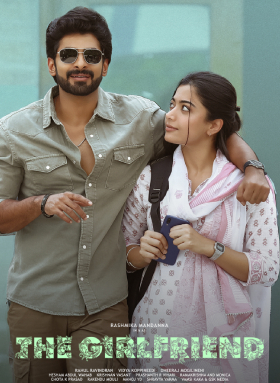
Bhooma is an MA student — bright, ambitious but growing up under family pressure and societal expectations. She meets Vikram (Vicky) and the two enter into a seemingly normal college romance. As the relationship develops, what begins like the typical “boy meets girl” story gradually transforms into something more complex.
According to reviews, the film “follows Bhooma (Rashmika Mandanna), an MA student who falls for Vikram (Dheekshith Shetty). What starts as a typical college romance gradually evolves into a deeply layered exploration of love, self-realisation, and the price of setting personal boundaries.” The Times of India
One of the visual metaphors used: The reviewer mentions how Bhooma is initially depicted as someone “frightened to even fight back after an accident. But over time her character transforms, she finds her voice, asserts herself … and moves from feeling stuck—visibly symbolised when she’s held by tree roots—to breaking free.” The Times of India
Thus the core arc: Bhooma’s journey from what feels like a passive partner to an empowered person who recognises her worth and sets boundaries. Vikram’s role evolves as well — from charming partner to controlling figure, and the film doesn’t shy away from depicting how love can bleed into control or coercion.
The friendship between Bhooma and Durga (Anu Emmanuel) forms another important thread: showing how female bonds support empowerment, contrasted with romantic/parental relationships which may impose limits.
In the climax, visual and narrative symbolism (such as Bhooma dropping her shawl) mark the transformation of the character — shedding the old self, the imposed self, and stepping into a new identity. The Times of India
Overall, the film uses the framework of romance/student-life as a vehicle to explore emotional maturity, self-respect, toxic dynamics, and the intersection of familial and romantic expectations.
Themes & Interpretation
Several themes stand out in The Girlfriend.
a) Love vs Control
The film examines how what initially looks like affection—romantic involvement, support, attention—can morph into control: a partner imposing decisions, limiting freedom, exerting dominance. The evolution of Vikram’s character underscores this. Reviews point to the film “mirroring the realities of many young women by exposing affection disguised as control with parents and romantic partners.” The Times of India
b) Self-Realisation and Boundaries
Bhooma’s journey is about discovering personal boundaries, learning to say “no”, and understanding that consent, autonomy and self-worth matter in relationships. The metaphor of being held by tree roots and then breaking free is a strong visual representation of growth. The Times of India
c) Female Friendship and Solidarity
The presence of Durga as a friend is not peripheral: it emphasises how women’s relationships with each other provide emotional space, mirror each other’s struggles, and enable growth beyond the gaze of a romantic partner or the expectations of parents.
d) Family Expectation & Parental Influence
Bhooma’s father (Rao Ramesh) embodies the pressure of family, expectation of “what a daughter should be”, and how those expectations feed into her relationship choices. The film uses family dynamics to show how young adults negotiate love, freedom, responsibility and identity.
e) College Life as Microcosm
Set in the backdrop of student/MA life, the film uses college as a stage for romance, ambition, friendship and self-discovery — which gives the story both youthful energy and realism.
f) Symbolism & Visuals
As one review noted, the metaphor of being tied by tree roots appears on screen to show stagnation; shedding the shawl in the climax symbolises transformation and letting go of the old self. The Times of India
In sum, The Girlfriend uses the romantic drama genre to address deeper issues of identity, control, freedom and growth.
Release & Box Office
The Girlfriend was theatrically released on 7 November 2025. Wikipedia+1 According to one source, its runtime is about 138 minutes (2h18m) though other listings indicate around 2h10m. Fandango+1
As per the Wikipedia-based information, the country is India, language Telugu, and gross earnings reported about ₹20.5 crore. Wikipedia
Reviews from critics noted the film’s strong performances and relevant themes, though some criticism about pacing. The Times of India gave it 3.5/5 stars, praising its emotional layering and relevance. The Times of India
Thus, the film appears to have fared decently commercially and critically, marking a noteworthy entry in the genre.
Critical Reception & Highlights
Critics highlighted several strong aspects:
- Reviewers praised Rashmika Mandanna’s performance as nuanced and emotionally grounded. For example: “Rashmika beautifully captures the subtle emotional shifts” in her role as Bhooma.
- The film’s attempt to show “real and relatable” emotional landscapes in modern relationships was singled out. The Times of India review says: “Watch it if you enjoy emotionally layered films that feel real and relatable, exploring love, loss, and self-realisation with depth.
- On the critical side, some reviewers pointed to slow pacing and moments where the narrative felt stretched or overly familiar. In Cinema Express, it was noted: “Its metaphoric visual storytelling and Rashmika’s magnetic performance are its strengths. However, the stretched narrative and exaggerated contrasts between the leads make parts of the film feel unrealistic.
Overall, the film seems to have succeeded in its ambition, even if not perfectly flawless.
Significance in Contemporary Telugu Cinema
The Girlfriend fits into a trend in Telugu (and pan-Indian) cinema where romances are no longer just light-hearted entertainments but vehicles for social commentary and emotional realism. Young adult protagonists, college settings, friendships, and female agency — all these are elements becoming more prevalent.
By focusing on a female protagonist’s emotional journey and by giving space to female friendship (rather than just a romantic plotline), the film aligns with evolving audience expectations. It also engages with the idea of “what a relationship should be” in a generation bending away from traditional molds.
Moreover, the choice of a major star like Rashmika Mandanna in the lead underscores how mainstream film industry recognizes this shift.
Possible Discussion Points & Questions
- How does the film depict the transition from innocence to empowerment in Bhooma’s character?
- In what ways does Vikram’s character act as a mirror to societal expectations of men in relationships?
- The role of family in the film (Bhooma’s father, parental expectations) — how does it influence her choices?
- The significance of female friendship (Durga) and how that alternative relationship system supports or contrasts with romance.
- Visual metaphors (tree roots, the shawl) — what do they signify about identity and change?
- Does the film succeed in portraying “control disguised as love”? If yes, how effectively?
- How does the college/MA student backdrop add to the effectiveness of the story?
- In the wider context — what does The Girlfriend say about modern relationships in India (especially among youth)?
- On the execution side: the pacing and narrative elasticity — what works and where might the film falter?
Final Thoughts
The Girlfriend may at first glance appear as a simple romance set on a campus, but it gradually reveals itself as a layered narrative about self-worth, boundaries, power dynamics and emotional growth. Rashmika Mandanna’s performance anchors the film, and director Rahul Ravindran’s attempt at marrying commercial appeal with introspection largely succeeds.
For viewers and critics who seek more from the “romance” tag than just fleeting affection and easy drama, this film offers substance. While not devoid of flaws (pacing issues, narrative familiarity), it highlights an important shift in mainstream regional cinema: romance as more than just love, but as a catalyst of self-realisation.
In conclusion, if you’re interested in a film that addresses youth relationships with honesty and emotional depth — while still having the mainstream polish of a Telugu production — The Girlfriend deserves a look.