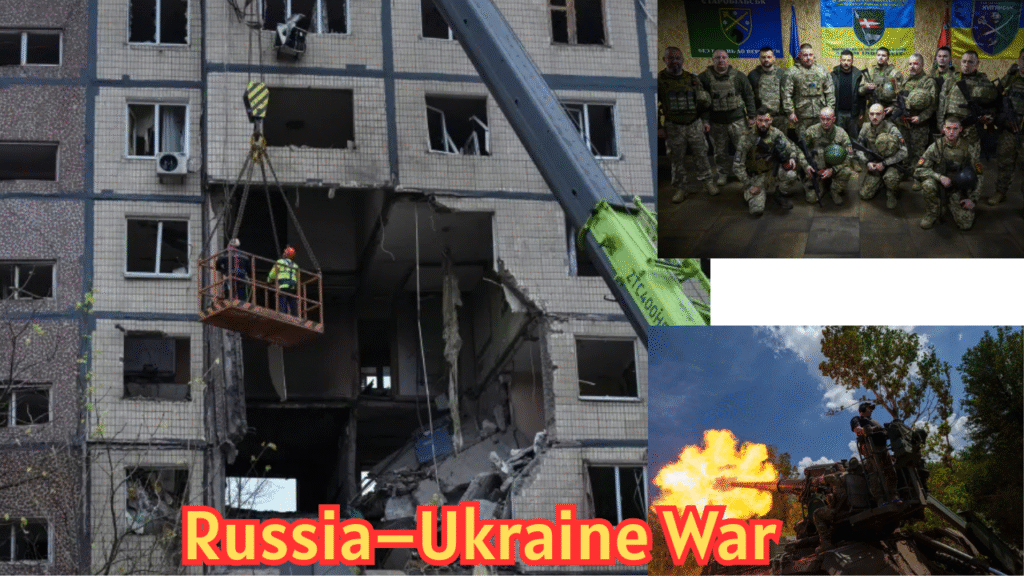

On day 1,354 of the Russia–Ukraine war — that is, on 8 November 2025 — the conflict between Russia and Ukraine entered yet another intense phase. A set of key events unfolded: Russian attacks struck residential and energy infrastructure in Ukraine; Kyiv claimed that Russia had recruited large numbers of African fighters; and the strategic conduct of the war appeared to shift. This article outlines the main developments of that day, places them in context, and considers their implications for the war’s trajectory.
Strikes on Residential and Energy Sites in Ukraine
On 8 November, Ukrainian officials reported that Russia had launched attacks which hit residential buildings as well as energy infrastructure. According to reporting by Al Jazeera, at least 11 people were killed in one of these episodes.
The deliberate targeting of energy sites — including grid-substations and thermal power plants — appears to align with a broader Russian strategy of inflicting civilian disruption, alongside military operations. An additional report noted power interruptions and black-outs lasting many hours across various regions.
This pattern of attacks on civilian infrastructure, especially in winter or approaching winter, magnifies the humanitarian dimension of the war. With colder weather coming, disruptions in heating, electricity and other services affect not only soldiers but ordinary citizens, and thus increase pressure on Ukraine’s government and society.
Ukraine’s Claim: Over 1,400 Africans Recruited for Russia
In another development that day, Ukrainian authorities claimed that Russia had recruited more than 1,400 African nationals to fight on its side in the war. According to the Al Jazeera summary, Ukraine made this allegation in the context of the conflict’s widening geographic recruitment and escalation. Al Jazeera
If the figure is accurate, this indicates several important trends:
- Russia is seeking manpower beyond its traditional pool of conscripts and volunteers, perhaps in the face of manpower constraints.
- The war is becoming ever more internationalised, not only in terms of foreign weapons supplies but also in terms of fighters.
- Ukraine is drawing attention to these recruitment practices as part of a diplomatic and informational strategy, hoping to build pressure on Russia through international scrutiny.
Strategic Shifts and Tactics on the Frontline
Beyond the specific strikes and recruitment claims, day 1,354 also reflects evolving tactics and strategy on the ground. According to analysis by Euromaidan Press, Russia may be moving away from attempts to hold large territorial gains, and instead shifting to a strategy aimed at making large swathes of Ukrainian territory “unlivable.” For example:
“Russia is abandoning territorial occupation in favor of making the country unlivable.”
One highlighted case involves the town of Pokrovsk in Donetsk Oblast: the suggestion is that Moscow may have lured Ukrainian reinforcements away from Pokrovsk, thereby reducing Ukraine’s ability to mount counter-operations there.
This hints that the war is entering a phase where psychological pressure, infrastructure degradation, energy warfare, and rear-area strikes assume greater prominence, as the frontlines become more static and attritional.
Humanitarian and Civilian Impact
The attacks on energy infrastructure and residential zones inevitably carry heavy humanitarian consequences. When power plants, substations, and grid links are disabled or heavily damaged, civilians face heat loss, lack of lighting, disrupted water supplies and other services. In the winter-war context, this becomes a tactic of attrition, aiming to affect morale and civilian resilience.
Moreover, hitting residential buildings signals that civilians are being directly caught in the fighting — raising concerns of international humanitarian law. Although neither side has publicly detailed full casualty figures or displacement numbers for this specific day, the broader pattern of civilian suffering is well-established in the war. Analysts have warned that structural damage in Ukraine may generate new waves of internal displacement or refugee flows, strain local administrations, and amplify pressure on Western allies.
International and Diplomatic Dimensions
Day 1,354 also plays out against a backdrop of mounting international dynamics:
- Ukraine’s claim of African recruits highlights the global dimension of the war and may aim to galvanise donor and sanctioning states into greater action.
- Russia’s strategy of targeting energy and civilian infrastructure is likely to draw new condemnations and may push Western states to intensify sanctions or arms support to Ukraine.
- There is also the question of how winter warfare will affect European energy security, given Ukraine’s role as a transit country, and how spill-over effects may be felt in neighbouring states.
- The narrative of Russia shifting to a “make-unlivable” posture may alter how Western strategists assess the war: not merely a territorial conflict, but one involving infrastructure, endurance and societal resilience.
The Broader War Context — Why Day 1,354 Matters
To fully appreciate the significance of this day, it helps to situate it in the larger war timeline:
- The war officially entered a new phase with Russia’s full-scale invasion of Ukraine in February 2022.
- Over the years, Ukraine’s counter-offensives, Western arms supply, and Russian mobilisations have produced an industrialised war with high casualties, shifting frontlines and contested logistics.
- As the war drags on into its thousand-plus day, both sides face attrition: Russia struggling with manpower and Western sanctions; Ukraine coping with infrastructure damage, refugee flows, and the challenge of maintaining Western attention.
- Day 1,354 suggests that the war is no longer solely about sweeping territorial breakthroughs (though these still occur) but increasingly about pressure campaigns — energy, morale, infrastructure, recruitment — alongside the front-line fighting.
Implications and What to Watch Going Forward
The key events of day 1,354 have several implications and point to issues to monitor:
- Winter & energy phase: With colder months ahead, disruption of heating and electricity becomes not simply a human crisis but a component of warfighting. How Ukraine rebuilds or bypasses damaged infrastructure will be vital.
- Recruitment & manpower: If Russia is indeed tapping African recruits, questions arise about the size, training, deployment and legal status of such fighters — and how Ukraine and its allies respond.
- Frontline stasis vs manoeuvre: If the war’s tempo is shifting toward static lines, then logistics, fortifications, drones, indirect fire, and infrastructure become key. Ukraine may need to adapt its strategies accordingly.
- Diplomacy & sanctions: The international community may face fatigue after years of war. Major attacks on civilians and infrastructure (such as during day 1,354) may test the endurance of donor states, as well as Russia’s tolerance of increased isolation.
- Morale and civilian resilience: With sustained attacks on towns and cities, the morale factor — both military and civilian — becomes central. The ability of Ukraine to maintain public support and of Russia to sustain its force posture are under pressure.
- Spill-over risks: As energy grids and infrastructure are targeted, there is potential for impacts beyond Ukraine’s borders, especially in terms of refugee flows, energy supply disruptions, and regional stability.
Conclusion
Day 1,354 of the Russia–Ukraine war marks another significant moment in a long, drawn-out conflict. The combination of Russian strikes on civilian and energy infrastructure, claims of mass African recruitment, and observed shifts in Russian tactics underline how this war continues to evolve beyond traditional battlefield engagements. For Ukraine, the task is now not only to hold front-line positions, but also to protect its civilian infrastructure, keep its society functioning and maintain international support. For Russia, the shift toward making territories unlivable signals a war of attrition, aimed not just at defeat of the Ukrainian military but at the weakening of the Ukrainian state and society.
As the winter approaches, the next phase of the war may very well hinge on who can better weather the infrastructure and endurance battle. Day 1,354 may not yield sweeping territorial changes, but it reveals the layered nature of modern warfare: ground battles, drone and missile strikes, manpower recruitment, infrastructure warfare, and civilian endurance. Observers and policymakers will need to watch closely how these different dimensions play out in the coming weeks.