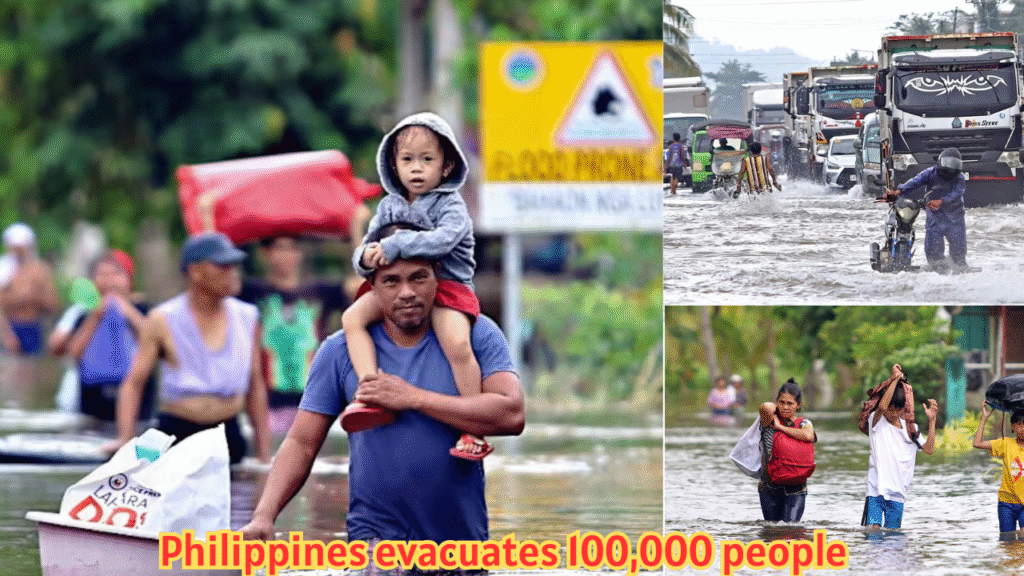

The Philippines is once again bracing for a major natural calamity. As of 9 November 2025, more than 100,000 residents across eastern and northern regions of the country have been evacuated in anticipation of Super Typhoon Fung‑wong (locally named “Uwan”), which has rapidly intensified into a super typhoon and threatens to unleash destructive winds, torrential rainfall, and life-threatening storm surges.
Background and context
The Philippines — an archipelagic nation of more than 7,000 islands — lies in one of the most typhoon-prone regions of the world. It regularly faces tropical cyclones, heavy rainfall, landslides and flooding. With its geography of long coastlines, low-lying coastal plains and mountainous terrain inland, the country remains highly vulnerable to natural hazards.
In the past few weeks, the country has already been hit by another major storm: Typhoon Kalmaegi (locally “Tino”), which struck central Philippines and caused widespread destruction, killing over 200 people and displacing hundreds of thousands.
Against that backdrop of recovery and vulnerability, the approach of Fung-wong is raising alarm bells. Authorities have therefore moved quickly to order evacuations and raise the highest levels of storm warnings.
Storm details: strength, path, warnings
According to the state weather service Philippine Atmospheric, Geophysical and Astronomical Services Administration (PAGASA), Super Typhoon Fung-wong is packing maximum sustained winds of approximately 185 km/h (about 115 mph) and gusts reaching up to 230 km/h.
The storm is moving west-northwestward, at roughly 25 km/h, and is expected to make landfall in the central Luzon region (particularly in provinces such as Aurora) on the night of 9 November or early 10 November.
PAGASA has raised Tropical Cyclone Wind Signal (TCWS) No. 5 — the highest alert level — for southeastern Luzon including islands like Catanduanes, and coastal areas of Camarines Norte and Camarines Sur. Meanwhile, Metro Manila and surrounding areas remain under Signal No. 3.
In addition to wind risk, authorities have warned of storm surges over 3 metres and heavy rainfall — possibly in excess of 200 mm in some areas — that may trigger flooding and river overflow.
Evacuations and early impacts
In response to the escalating threat, over 100,000 people have been evacuated from high-risk coastal and mountainous zones across the eastern and northern regions of the Philippines.
For example, in Camarines Sur, footage from the Philippine Coast Guard showed evacuees carrying bags and personal belongings transferring from boats to waiting trucks, as pre-emptive evacuation operations were mobilised.
Power outages have already been reported in parts of Eastern Visayas, and over 300 domestic and international flights have been cancelled ahead of the storm.
The disruption caused by repeated storms is pronounced: many communities are still recovering from the previous typhoon, which increases their vulnerability as infrastructure may already be weakened.
Why this storm matters: risks and vulnerabilities
The impending arrival of Fung-wong is particularly dangerous for several reasons:
- High wind speeds & wide swath – With gusts over 230 km/h and a rain‐and‐wind band possibly spanning over a thousand kilometres, the area of impact is vast. The storm’s size and strength could place large populations at risk.
- Storm surges & flooding – Coastal regions and low-lying islands may face dangerous storm surges, while heavy rainfall threatens mountainous areas prone to landslides or river overflow.
- Compounded vulnerability – The Philippines is still dealing with the aftermath of previous storms, making recovery harder and raising risk for cascading effects (e.g., disrupted infrastructure, limited shelter capacity).
- Population density & urban risk – Metro Manila and adjacent provinces are home to millions of people. Even though they are under Signal No. 3, the threat of rain, floods and associated secondary hazards remains serious.
- Climate change context – Meteorologists have highlighted that warmer oceans and atmosphere from climate change contribute to faster intensification of typhoons and heavier rainfall
Regional and national response
The government, led by Ferdinand Marcos Jr. and in coordination with agencies such as the Office of Civil Defence, has issued a national state of emergency in anticipation of the storm.
Evacuation orders have been issued and implemented. Local officials are urging residents in high-risk zones (coastal barangays, steep terrain, flood‐prone areas) to move immediately to evacuation centres or safer ground. Defense Secretary Gilberto Teodoro Jr. has warned: “When it’s already raining or the typhoon has hit and flooding has started, it’s hard to rescue people.”
International partners, including the U.S. and Japan, have signalled readiness to provide assistance, though as of the current moment no formal international appeal has been made. AP News
Human dimension: stories and warnings
The images emerging from the preparatory operations in the Philippines are evocative: in coastal towns, residents with plastic bags and few personal belongings board narrow boats or trucks, moving away from homes they hope to return to soon. In one region, the sky ahead of the storm appeared ominous: dark clouds, trees bending under gusts, rain already starting to lash. mint+1
For many ordinary citizens, this is not just a weather bulletin but a call to action: secure homes, move possessions, charge mobile phones, monitor updates, and above all heed evacuation orders. Local officials emphasise that delay can cost lives.
What to expect in the coming days
- Landfall & immediate impact: Fung-wong is forecast to make landfall in Aurora province or nearby areas on the late evening of 9 November or early 10 November. The strongest winds and rainfall will be
- After-effects: Even after the eye of the storm passes, residual rain bands may bring flooding, landslides, and prolonged power or communications outages. Post-storm, access to food, clean water, shelter and medical services may be constrained.
- Recovery & damage assessment: Given that the country is already in recovery mode from a prior typhoon, the damage assessment will be vital. Infrastructure (power lines, bridges, roads) may be damaged; homes in vulnerable areas may be submerged or destroyed.
- Regional implications: The storm’s path may shift northwards, possibly affecting Taiwan or other neighbouring regions after the Philippines.
Why this event draws wider attention
There are several reasons this event matters beyond the immediate impact:
- Disaster frequency: The Philippines regularly experiences around 20 tropical cyclones a year, and repeated hits increase vulnerability, especially for poorer communities.
- Climate implications: Rapid intensification of storms like Fung-wong underscores how climate change is making extreme weather more hazardous and less predictable.
- Humanitarian and economic cost: Large-scale evacuations, infrastructure disruptions and lost livelihoods (farming, fishing, tourism) pose longer-term challenges.
- Global solidarity & preparedness: Monitoring how the Philippines and its disaster response system cope offers lessons for other nations facing similar risks.
What lessons and actions should we take
- Early warning and timely evacuation matter: The decision to evacuate 100,000 people ahead of landfall likely saves lives. Delays or ignoring warnings can lead to catastrophe.
- Understanding risk zones: Communities along coastlines, near rivers, in steep terrain or with weak housing must especially heed warnings and have evacuation plans.
- Infrastructure resilience: Power grids, roads, communications, drainage must be built or reinforced to withstand stronger storms, especially given climate trends.
- Community awareness and preparation: Families should have emergency kits (food, water, medicines, phone chargers), know evacuation routes, keep tabs on local alerts and authorities.
- Post-storm recovery planning: Relief operations must be ready even before the storm hits — for sheltering evacuees, restoring services, clearing debris, and for reconstructing in a way that reduces future risk.
Conclusion
The forthcoming landfall of Super Typhoon Fung-wong presents a stern test for the Philippines — a test of preparedness, resilience, and response capacity. With wind speeds surpassing 185 km/h, gusts up to 230 km/h, a breadth that could span much of the country, and dozens of coastal provinces under highest alert, the situation is grave. The evacuation of over 100,000 residents is a positive, proactive measure — but the storm’s power combined with the Philippines’ vulnerability means significant impacts are very likely.
For the residents, the authorities, and the international community watching, this is a reminder that nature’s intensity is increasing, and our systems — from local communities to national governments — must remain vigilant, ready and resilient. The coming days will reveal how effectively the Philippines weathers this storm, and how quickly recovery begins.