
Growing sunflowers at home is one of the easiest, most rewarding gardening activities—especially for beginners. These bright, cheerful flowers bring instant beauty to any space, attract pollinators, and can even provide seeds for eating. Whether you have a large backyard, a small balcony, or just a few pots, you can successfully grow sunflowers at home with the right method.
This complete 1500-word guide will walk you through everything you need to know—types of sunflowers, soil preparation, seed selection, planting techniques, watering schedule, sunlight needs, fertilizers, pests, harvesting, and more.
Introduction: Why Grow Sunflowers at Home?
Sunflowers (Helianthus annuus) are famous for their bright yellow petals and tall stems. They symbolize happiness, positivity, and energy, which is why people love growing them around their homes.
Here’s why sunflowers are perfect for beginners:
- They grow fast
- They require very little maintenance
- They love heat and sunlight
- They grow well in pots as well as soil
- They are suitable for any home garden setup
- They attract butterflies, bees, and birds
- They produce seeds that can be eaten or replanted
Whether you want to decorate your home, create a small garden, or enjoy fresh sunflower seeds, this guide helps you start easily.
Best Sunflower Varieties for Home Growing
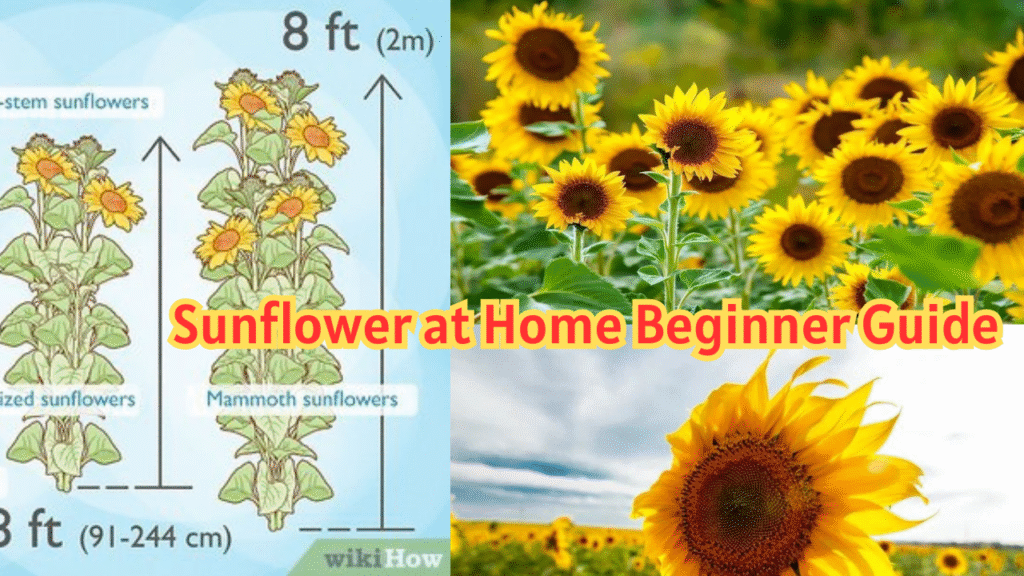
There are many types of sunflowers, but only a few are perfect for home gardens and pots. Choose varieties based on space and purpose.
Dwarf Sunflowers (Best for Pots & Small Balconies)
- Height: 1 to 3 feet
- Ideal for indoor pots or small balconies
- Examples:
- Sunny Smile
- Teddy Bear
- Pacino Gold
Medium-Height Sunflowers
- Height: 3 to 6 feet
- Good for patio or backyard garden
- Examples:
- Autumn Beauty
- Chocolate Sunflowers
- Music Box
Tall Sunflowers (Best for Open Backyard)
- Height: 6 to 12 feet
- Great for creating a natural fence
- Examples:
- Russian Giant
- Mammoth Grey Stripe
Choose a variety depending on your space and whether you want flowers or seeds.
What You Need Before Planting
Gather a few items before you start growing sunflowers:
Seeds
Buy fresh, high-quality seeds from a nursery or online store.
Soil
Sunflowers love loose, well-draining, nutrient-rich soil.
Ideal soil mix:
- 40% garden soil
- 30% compost / cow dung
- 30% sand or cocopeat
Pots or Containers (if you’re growing in pots)
- Minimum depth: 10–12 inches for dwarf varieties
- For tall sunflowers: 15–20 inches deep
- Choose pots with drainage holes
Watering can / spray bottle
To water gently without washing away seeds.
Step-by-Step: How to Plant Sunflower Seeds at Home
Planting sunflower seeds is extremely simple. Follow these steps for guaranteed success:
Prepare the Soil
Mix garden soil + compost + sand/cocopeat.
Ensure the soil is loose, airy, and well-draining.
Fill the Pot or Prepare Ground
- If planting in pots → fill 90% of the pot with the soil mix
- If planting in ground → loosen soil 12 inches deep
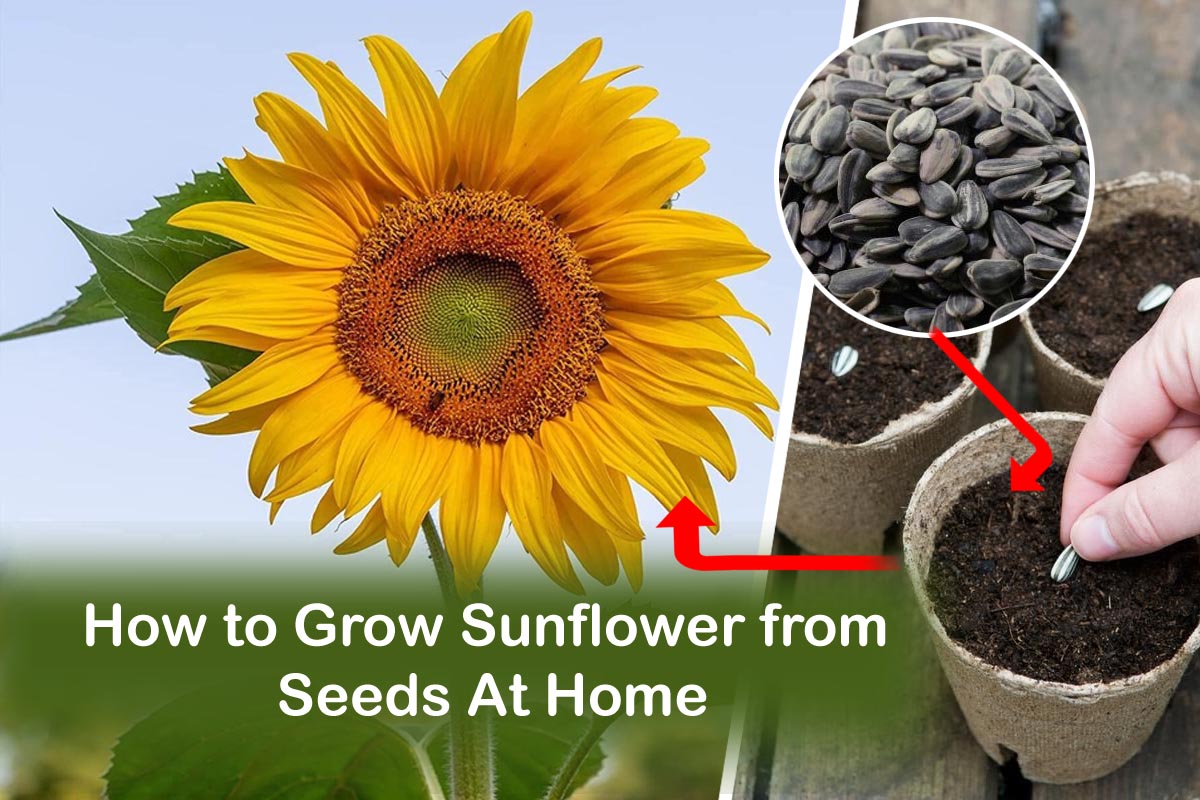
Plant the Seeds
- Make small holes 1 inch deep
- Place one seed per hole
- Cover lightly with soil
- Do not press the soil too hard
Spacing:
- Dwarf varieties: 6–8 inches apart
- Medium & Tall: 12–18 inches apart
Water Gently
- Water lightly so the soil becomes moist, not soggy
- Seeds take 5–7 days to sprout
Keep in Full Sunlight
Sunflowers need 6 to 8 hours of direct sunlight daily.
Sunlight
Sunflowers are sun-lovers.
Minimum: 6 hours
Best: 8 hours direct sun per day
They grow faster and produce bigger flowers when they receive more sunlight.
Temperature
Best growth temperature: 20°C–30°C
They tolerate heat very well.
Watering Schedule
Sunflowers need consistent moisture but not too much water.
- Water every 2–3 days
- In summer, water daily
- Keep soil moist until flowering
- Avoid overwatering to prevent root rot
Fertilizers
Use mild fertilizers for faster growth:
- Vermicompost
- Cow dung compost
- Liquid seaweed
- Banana peel fertilizer
When to fertilize:
- Once after 15 days of planting
- Then every 20 days
Avoid chemical fertilizers for home-grown plants.
Taking Care of Your Sunflower Maintenance Tips
Support for Tall Varieties
Tall sunflowers may fall because of wind. Tie them to:
- Bamboo sticks
- Wooden stakes
- Garden poles
Pruning
Sunflowers do not need heavy pruning.
Just remove:
- Yellow leaves
- Damaged stems
- Dry flowers (deadheading)
Mulching
Add a thin layer of dry leaves or straw on top of soil.
This helps:
- Lock moisture
- Reduce weeds
- Keep soil cool
Protection from Heavy Rain
If you’re growing in pots, shift them to a covered area during storms.
Common Pests & Diseases And How to Prevent Them
Aphids
Small insects sucking sap from leaves.
Solution: Neem oil spray every 7 days.
Caterpillars
They chew the leaves.
Solution: Pick them manually or use organic pesticide.
Powdery Mildew
White powder-like layer on leaves.
Solution: Do not wet leaves while watering. Provide good sunlight.
Birds & Squirrels
They love sunflower seeds.
Solution: Use a net when seeds start forming.
Flowering Stage: What to Expect
Sunflowers usually take:
- 45–60 days for flowering (dwarf)
- 70–90 days (tall varieties)
Signs of flowering:
- Bud forms at top
- Bud starts pointing toward the sun
- Petals unfold gradually
Tip: During early flowering, reduce fertilizer and increase sunlight.
How to Harvest Sunflower Seeds
If you’re growing sunflowers for seeds, harvesting is the most exciting part.
Steps:
- Wait until the back of the sunflower head turns yellow or brown
- Seeds will look swollen and hard
- Cut the flower head using scissors
- Dry it in sunlight for 3–5 days
- Rub gently to remove seeds
After harvesting, you can:
- Roast and eat the seeds
- Store for next season
- Feed birds
- Use in salads
Growing Sunflowers in Pots vs. Soil
In Pots
- Best for small spaces
- Easy to water and move
- Choose dwarf varieties
In Garden Soil
- Plants grow taller
- Higher yield
- Fewer watering needs
Both methods work well as long as the plant gets enough sunlight.
Bonus Tips for Beginners
Plant Multiple Seeds
Plant seeds every 10–15 days for continuous flowers all season.
Rotate the Pot
If growing in pots, rotate weekly to ensure even growth.
Choose the Right Variety
Beginners should start with dwarf or medium-height sunflowers for easy care.
⭐ Tip 4: Avoid Overcrowding
Sunflowers need space for their roots to grow.
Keep Soil Always Slightly Moist
Dry soil = slow growth
Overwet soil = root rot
Balance is important.
Final Thoughts
Growing sunflowers at home is simple, joyful, and beginner-friendly. With just sunlight, good soil, regular watering, and a little care, you can enjoy bright blooms in a few weeks. They add beauty to your garden, attract butterflies and bees, and even produce delicious seeds. Whether you’re gardening for fun, decoration, or seed production, sunflowers are one of the best plants to start with.
If you’re a beginner, follow the steps in this guide, and you’ll achieve beautiful results—no special tools or expert experience needed.