
Confirmed facts
- The operation was carried out by the Jammu & Kashmir Police (J&K Police), in coordination with Haryana Police (Faridabad) and intelligence agencies.
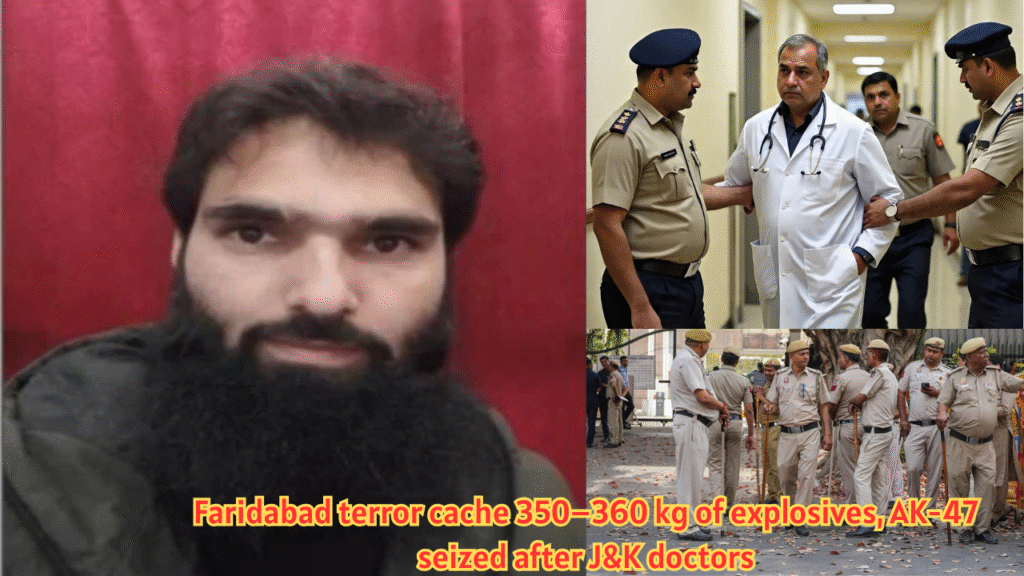
- Officials say around 350 kg of explosives — suspected to be ammonium nitrate, not RDX — were seized from a rented accommodation in Dhauj village, Faridabad.
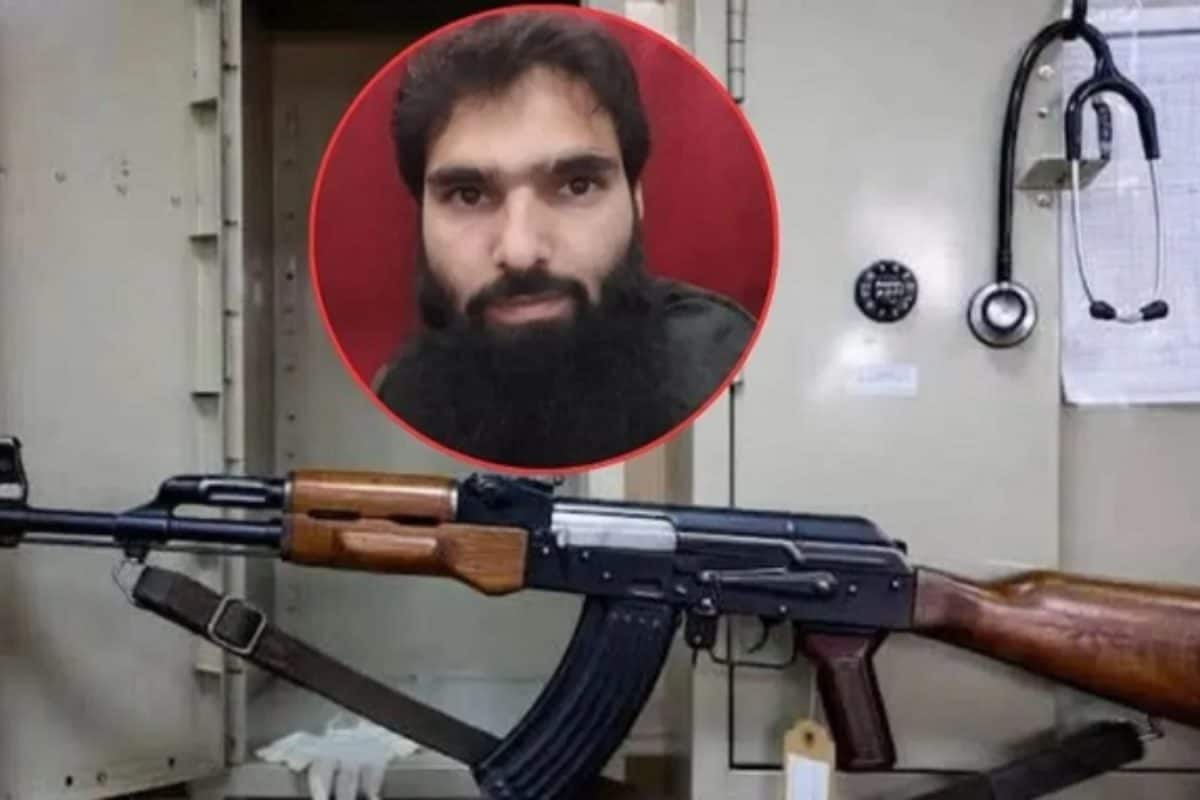
- An AK-47 assault rifle (or “kalashnikov style rifle”), along with magazines and live ammunition, was found in the raid.
- Two doctors originally from Jammu & Kashmir are under arrest/being investigated in connection with this.
- One identified as Dr Adil Ahmad Rather, arrested earlier in J&K in connection with terror-poster case.
- The other identified as Dr Muzammil Shakil (also spelled Muzammil Ganaie or Mujahil Shakil), who had rented the flat in Dhauj about 3 months ago.
- The material was being stored in a manner that suggests preparation for large-scale terror or IED-type activity. Officials say the quantity of the explosives and accompanying timers, wires, batteries and walkie-talkies indicate high intent.
Key details & caveats
- It’s not confirmed whether the explosives were meant for a specific planned attack, or whether the cache was in storage/preparation phase. Officials say investigations are ongoing.
- While earlier media reports mentioned “RDX”, police have clarified the material recovered is suspected ammonium nitrate, which is still highly dangerous but chemically different
- The exact total of IED-making materials differs across reports: some say ~350 kg; others mention 360 kg.
- There are suggestions the module is part of a “white-collar terror ecosystem” involving professionals (such as doctors) and cross-border (Pakistan) links, but these remain under investigation and require further proof.
Location & modus operandi
- The flat was in Dhauj village, Faridabad (Haryana), rented about 3 months ago by Dr Muzammil Shakil.
- The stash included the explosives in 12 suitcases and buckets (according to some reports), timers, wires, batteries, walkie-talkies and firearms.
- The arrest of Dr Adil Rather in J&K uncovered posters of the banned terror outfit Jaish‑e‑Mohammed (JeM) in Srinagar, which then led investigators to the Faridabad link.
What authorities are investigating
- The chemical forensics: confirming exactly what the “explosives” are and their potency. (> Whether ammonium nitrate alone or combined with other agents)
- Links to terror organisations: whether the doctors and others were acting under direction of a foreign-based terror group, or were independently radicalised.
- Funding, sourcing and logistics: how the large quantity was procured, transported and stored without detection.
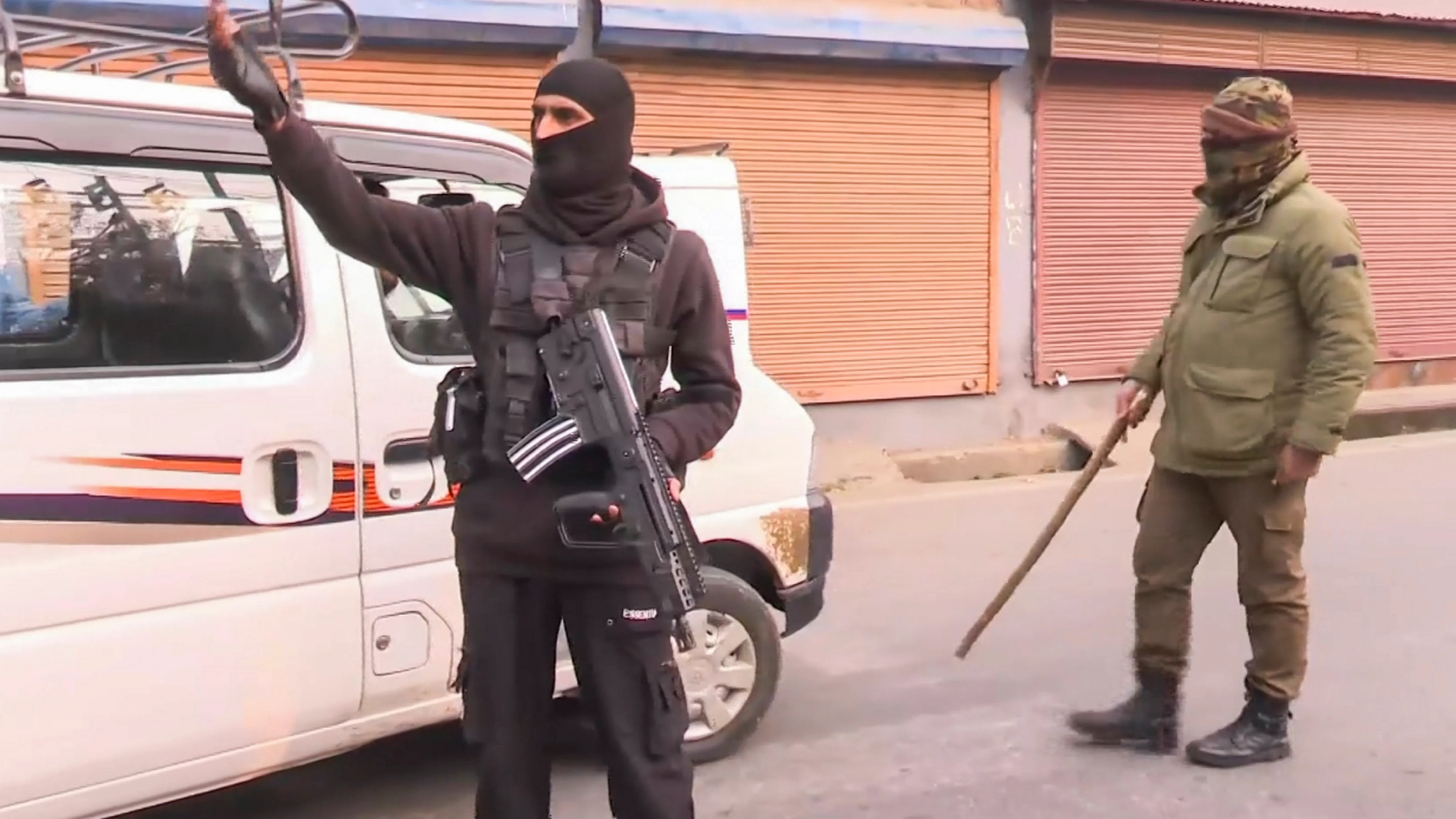
- Additional accomplices: search operations are expanding across states (J&K, Haryana, UP) to identify more links.
Why this case is significant
- The size of the haul is very large for a domestic discovery (~350 kg+ of explosive precursor).
- The involvement of medical professionals (doctors) raises questions about infiltration of terror modules into unexpected professions.
- The link-between J&K and NCR region (Faridabad) shows possible cross-regional operations, not just localised.
- The implications for security in Delhi-NCR are high, given the proximity and potential for large-scale impact.
Summary
In short: Police uncovered a major terror‐module cache in Faridabad after the arrest of doctors from J&K. Around 350-360 kg of suspected ammonium nitrate, an assault rifle (AK-47 style) with live ammunition, timers and communication devices were seized. The key suspects rented a flat for storing this material; investigations show ties to posters and recruitment linked to JeM. Forensics, funding trails and broader network links remain under investigation.