
Introduction
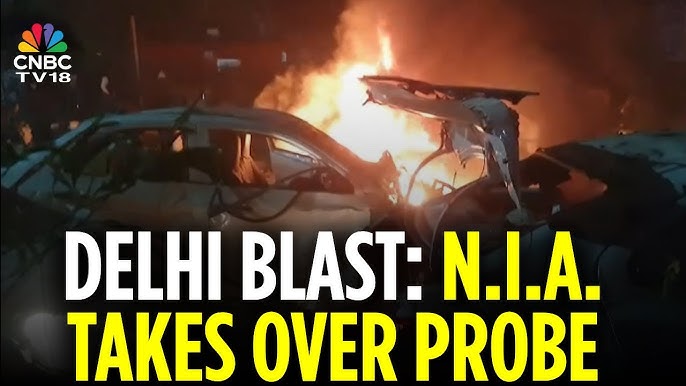
On the evening of Monday, 10 November 2025, a powerful explosion ripped through a car near the iconic Red Fort Metro Station in Delhi, killing multiple people and injuring many othersIn response, the National Investigation Agency (NIA) has formally taken over the investigation from the local police after the Ministry of Home Affairs (MHA) decision. this article brings together the latest live updates, key facts of the case, investigation developments, the political and security fallout, and what lies ahead.
The Blast Incident: What We Know So Far
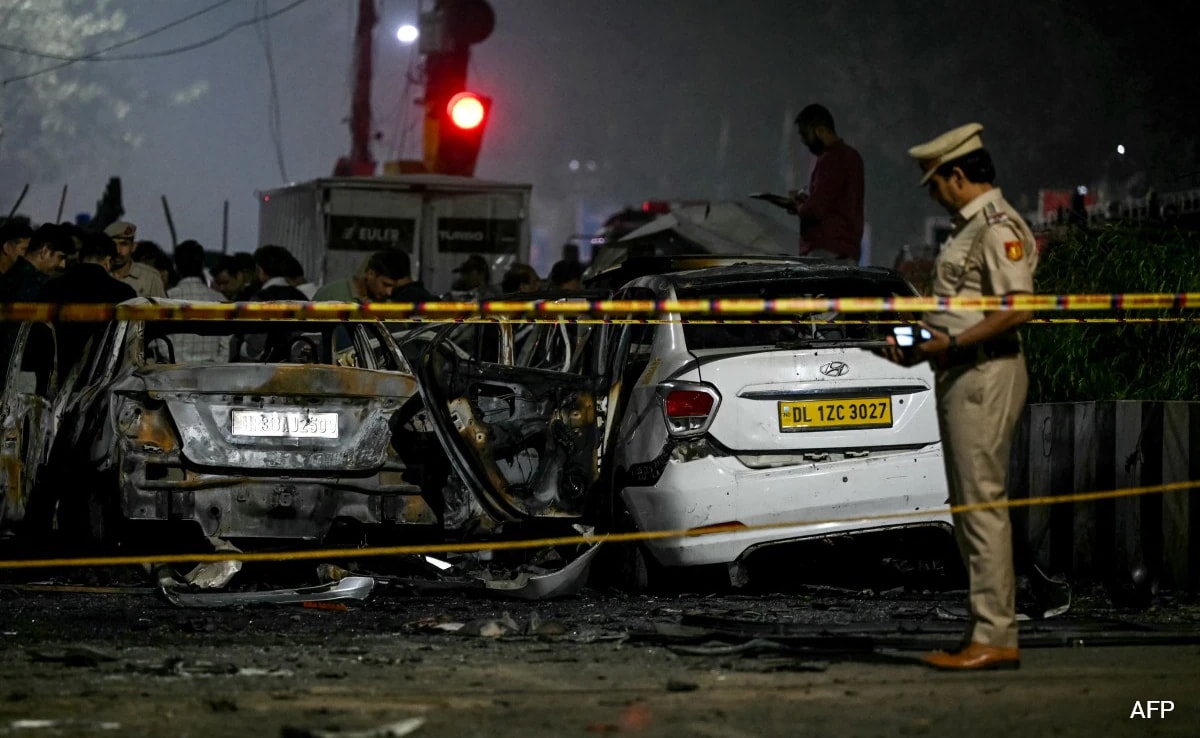
- According to official sources, the explosion occurred in a Hyundai i20 that was moving slowly near the Red Fort Metro Station’s Gate No.1 / a traffic signal on Subhash Marg, around 6:50 pm on Monday.
- Initial death toll: at least eight people killed and over 20 injured.Later updates suggest the number of dead may have risen to 12 or more.
- The explosion occurred in a busy and crowded stretch of the national capital, escalating serious concerns about urban terror vulnerability.
- Forensic teams and security agencies at the scene reported recovering traces of high-grade explosives and preliminary signs that the incident was not accidental.
- Schools and colleges remained open but a high alert was declared across Delhi and the surrounding National Capital Region (NCR).
Why the NIA Took Over: Significance & Implications
- The Ministry of Home Affairs officially handed the probe to the NIA, citing the possibility of “terror links” and the need for a national-level investigation.
- The invocation of the Unlawful Activities (Prevention) Act (UAPA) and the Explosives Act by the Delhi Police signals a shift from a purely criminal investigation to one of counter-terrorism.
- A handover to NIA means that the investigation will potentially widen to include external (cross-border) links, trafficking of explosives, terror-modules, financing, and conspiracies that span states or even international jurisdictions.
- For the government and security establishment, this move also serves to send a message: attacks in the heart of the nation’s capital will be met with full national response, no matter how complex.
Key Investigation Developments
- CCTV footage shows the Hyundai i20 parked near a Faridabad petrol pump days earlier (around 29 October) suggesting pre-plannin.
- Three doctors from Al‑Falah University, Faridabad have been taken into custody for questioning in relation to a terror‐module allegedly linked to the attack.
- A woman doctor from Uttar Pradesh, Dr Shaheen Sayeed, is said to be a key suspect accused of working to set up the women’s wing of the terror group Jaish‑e‑Mohammed in India.
- Investigation trails point to links with Jammu & Kashmir’s Pulwama district — the car’s ownership and origin may trace back there.
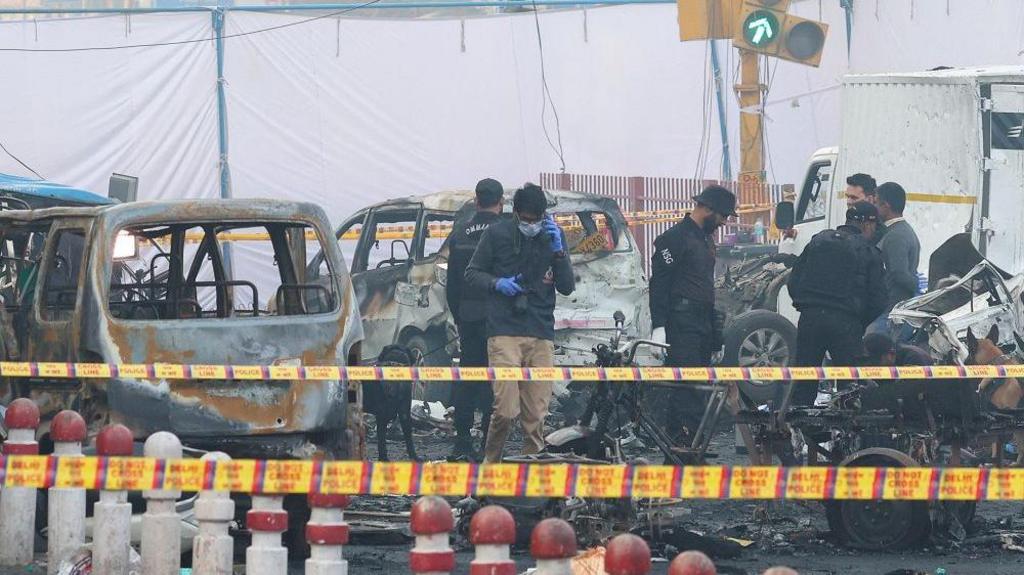
- The site investigation is being carried out jointly by the Delhi Police, NIA, Forensic Science Laboratory (FSL) teams, and even the National Security Guard (NSG) in search of evidence of terror networks or supply chains.
Political & Security Fallout
- Amit Shah, Union Home Minister, chaired high‐level meetings promptly after the blast and declared: “those behind this will face the full wrath of our agencies.”
- The incident has triggered heightened security across Delhi: major transportation hubs, metro stations, airports and public gatherings are under additional scrutiny.
- International reaction: countries such as Japan, Canada and the United States have issued condolences and advisories. The US embassy issued a security alert for its citizens in India.
- Opposition parties are seeking clarity on how such an attack could take place in the capital, raising questions of intelligence failure, lapses in surveillance and coordination among agencies.
Human Impact: The Victims & Community Response
- Families of the deceased have been thrown into deep grief. One relative of a victim said the family had only two earners and has now lost a bread-winner.
- Local businesses, traffic and daily life around the Red Fort area and the historic Old Delhi district have been disrupted. People are cautious and security checks have caused delays.
- There is a collective sense of shock: an attack in a landmark area of Delhi raises fears, especially given the location’s tourism and heritage value.
What Do We Still Don’t Know – Open Questions
- The exact motive and identity of all conspirators are yet to be made public. While terror link is strongly suspected, formal claims or group responsibility have not yet emerged.
- The ownership and full trail of the vehicle (Hyundai i20) used in the blast is under investigation — when was it bought, by whom, and how it entered into the conspiracy?
- The source of the explosives: where they originated, how they were stored, transported, and whether there are more planned attacks remain unknown.
- The extent of the network: is this a domestic terror cell alone, or is it backed by external players? Do other states or international routes link to this?
- Intelligence prior to the attack: Were there warnings? Were alerts ignored or missed? These questions will be central in the commission of inquiry.
Looking Ahead: What Happens Next?
- With the NIA now in charge, expect a slower but deeper investigation — meaning prolonged interrogations, forensic tracing, cross-state coordination, and possibly inter-agency and international cooperation.
- Legal dimension: If UAPA charges are formally framed, they will make prosecution tougher and lengthier, but also bring into play higher penalties for terror acts.
- Implications for security architecture: This blast may trigger reviews of urban terror preparedness, especially in heritage/ crowded zones, metro stations and heritage-tourist circuits.
- For the public: heightened vigilance, possible restrictions in sensitive zones, and increased security protocols in transport hubs will likely become new normal for some time.
- For policy: India’s counter-terror strategy may be recalibrated — including more resources to the NIA, better intelligence‐sharing among states and local policing, and stricter checks on explosives and vehicle registrations.
Conclusion
The blast near Delhi’s Red Fort Metro Station has jolted India’s capital, raising immediate questions of how such an incident could happen in a heavily guarded zone and what security gaps it reveals. That the NIA has taken over the investigation signals the gravity of the incident and the suspicion of a terror dimension. While many facts are still emerging — motive, full network, explosives trail — what is clear is the rapid mobilisation of agencies and political leadership to respond.
For the victims and their families, the human cost is devastating. For the city at large, the event is a reminder of the persistent threat of terrorism even in urban heartlands. And for India’s security architecture, this incident may well become a turning point: prompting tighter processes, better coordination, and sharper focus on preventing the next one.
As the investigation deepens, we will likely learn more about the networks operating beneath the surface, the cross-border links and the home‐grown radicalisation pathways. Until then, Delhi and India remain on high alert — watching, waiting and hoping for answers.