
Introduction
The film “Dashavatar” offers a unique blend of mythology, culture, and modern cinematic storytelling. With its compelling narrative drawing from the ten incarnations of Vishnu and its inventive presentation, it stands as an interesting piece in Indian cinema. In this article, we will explore the background of the movie, its plot, the key themes, production details, reception, and its cultural significance.
Background and Release
“Dashavatar” is not just one film but refers to at least two distinct films with this title. For clarity:
- One is the 2008 Hindi‐language animated feature directed by Bhavik Thakore.
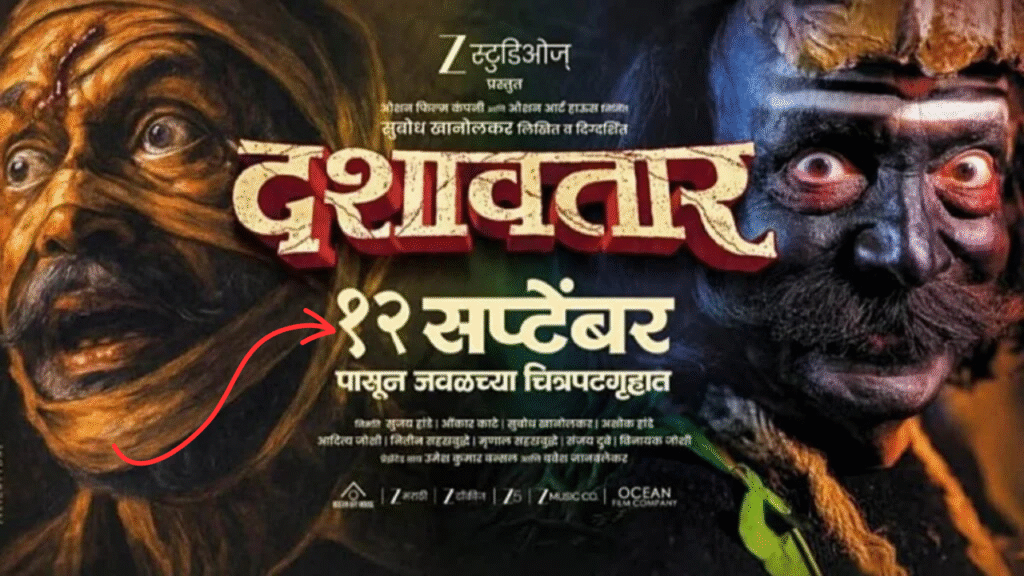
- The other is a 2025 Marathi‐language film directed by Subodh Khanolkar.
In this article, we will focus mainly on the 2025 Marathi film—its context, storyline, production details and significance—while also referencing the earlier 2008 animated version to highlight how the title and concept have been adapted and reinterpreted across time.
The Mythological Core Dashavatāra
The term “Dashavatāra” means the ten incarnations of Vishnu—a central concept in Hindu belief, where Vishnu incarnates in different forms across ages (yugas) to restore cosmic balance.
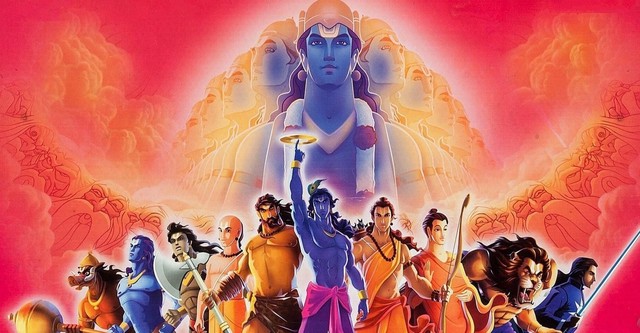
The 2008 animated film takes this quite literally, depicting all ten avatars—from Matsya (the fish) through Kurma, Varaha, Narasimha, Vamana, Parashurama, Rama, Krishna, Buddha, and Kalki.
In contrast, the 2025 Marathi film uses the concept of “Dashavatar” in a metaphorical and cultural way: focusing on a folk‐theatre performer of the Dashavatari tradition in the Konkan region, whose life becomes a battleground between myth and reality. Wikipedia
Thus, the myth serves as both a literal story in one version and a cultural motif in another—setting up an interesting dichotomy of how Indian mythology can be used in cinema.
Plot Summary (2025 Marathi Version)
In the film’s story:
- The protagonist is Babuli Mestri (played by veteran actor Dilip Prabhavalkar), a respected but ageing performer of the Dashavatāri theatre tradition in the Konkan region of Maharashtra.
- He has dedicated his life to preserving the traditional folk art, despite failing eyesight and advancing age. His son Madhav (Siddharth Menon) urges him to retire so that he can secure a stable future for their family.
- On the festival of Mahashivratri, Babuli agrees to one final performance. But during the performance he seems to embody a fierce avatar (Rudra form), and a chain of events unfolds that blur the line between performance and real life. A tragedy strikes—Madhav is found dead under suspicious circumstances. Babuli, convinced that it was not suicide, begins to investigate, leading him into a spiritual, cultural and moral conflict.
- The film raises questions of heritage, ritual, faith, sacrifice, and the responsibility to protect both cultural legacy and natural environment.
Key Themes & Interpretations
- Heritage and Cultural Preservation
The film foregrounds a traditional art form—Dashavatāri theatre—that is regionally rooted in the Konkan coast. By making a film about this, the creators bring visibility to a form of folk culture that is often marginalised. As actor Siddharth Menon noted, the “Dashavatar tradition in Konkan” has fascinated him - Myth as Metaphor
Although the story is contemporary, the myth of the ten avatars is woven into the narrative: the performer himself becomes (symbolically) an avatar for change. The idea that one life can mirror many incarnations, fighting evil, protecting the vulnerable, is a powerful metaphor. - Aging, Legacy and Transition
Babuli’s story is about an elder generation passing the torch—but resisting the idea of giving up their life’s work. It speaks to the universal tension between duty, ageing, and the need to adapt. - Conflict between Modernity and Tradition
The film sets up the tension between modern jobs (Madhav getting a “stable employment”) versus the performing arts of Babuli. It raises questions about what modernity abandons when it abandons tradition. - Faith, Sacrifice and Nature
Beyond culture, the film touches on natural heritage (Konkan region, folk art ecosystems) and invites the viewer to reflect on faith (spiritual embodiment of avatars) and the cost of maintaining or losing those.
Production and Technical Details
- The 2025 film was directed by Subodh Khanolkar.
- It features Dilip Prabhavalkar in the lead, along with Mahesh Manjrekar, Siddharth Menon, Priyadarshini Indalkar, Bharat Jadhav and others.
- The shoot primarily took place in the Konkan region, including locales like Kudal (Maharashtra). The production aimed to preserve the folk-theatre essence while using modern cinematic techniques including VFX.
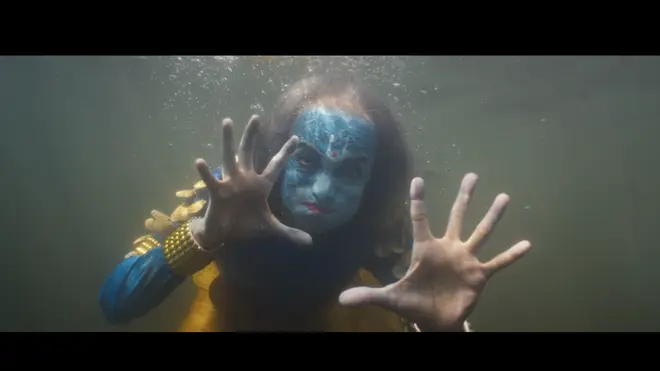
- The stylisation of costumes and makeup has been highlighted in media coverage: for example, the looks for Babuli’s various avatars were realised by costume designer Sachin Lovalekar and makeup designer Rohit Mahadik.
- The film had a theatrical release on 12 September 2025
Reception & Box-Office
- The film received mixed to positive reviews: critics praised the cultural authenticity, performances (especially of Dilip Prabhavalkar), and visuals. Some criticisms were aimed at the pacing and narrative coherence in the second half.
- On the commercial front, the film grossed over ₹28.44 crore at the box office and was reported as the highest-grossing Marathi film of 2025 (up to that point)
- It also achieved reach beyond Maharashtra: announcements indicate its release in Malayalam and other regions, marking a cross‐linguistic appeal.
Significance & Cultural Impact
- The fact that a Marathi film rooted deeply in Konkan folk theatre is achieving pan-Indian distribution is noteworthy. It signifies a resurgence or recognition of regional culture in mainstream cinema.
- The movie gives visibility to an older generation of artists, both on-screen (Babuli) and off-screen (theatre performers of the Dashavatāri tradition).
- It encourages dialogue on preserving intangible cultural heritage: folk art forms, costume craft, makeup, regional dialects, etc. As one article noted: the role demanded a two‐hour intense look and had a team working behind the scenes to realise the avatars
- By bridging myth and present, the film may inspire younger audiences to connect with traditional narratives in a contemporary way.

Comparison with the 2008 Animated Version
- The 2008 film directed by Bhavik Thakore (Hindi) is an animated retelling of the ten avatars of Vishnu in a fairly straightforward mythology approach.
- The target audience of the 2008 version is more children/family and educational in tone. It directly depicts the avatars: Matsya, Kurma, etc.
- The 2025 version, by contrast, uses myth as a vehicle for social drama, regional identity, and cultural reflection.
- Thus the same title “Dashavatar” demonstrates the versatility of Indian mythological motifs: from animation to folk-theatre inspired regional cinema.
Why This Film Matters for You
- If you are interested in Indian regional cinema, “Dashavatar” offers a rich case study: how Marathi film-makers are blending tradition and modern storytelling.
- For those fascinated by mythological cinema, the twist here is the anchoring in a real folk form rather than purely cinematic fantasy.
- From a cultural heritage perspective, it is relevant for understanding how art forms survive and adapt in the 21st century.
- And for general audiences, it offers drama, strong performances, mythic resonance, and a window into Konkan’s coastal culture.
Potential Limitations Things to Note
- Some reviewers have pointed out that the film’s second half suffers from uneven pacing and dramatic logic lapses
- While the mythic motif is powerful, it may require some prior familiarity or interest in folk theatre to fully appreciate all nuances.
- The film uses elements of suspence and narrative twists (a son’s death, confrontation with authority) that may shift tone from purely mythological to melodramatic for some viewers.
Conclusion
“Dashavatar” (2025) stands as an important film—not just for Marathi cinema, but as an example of how myth, culture and modern filmmaking can merge. It respects its folk theatre roots, brings a beloved mythological motif into a fresh context, and offers audiences both entertainment and reflection. Whether you come for the story of a performer in the Konkan or for the larger theme of ten avatars and human transformation, the film promises both mythic sweep and cultural grounding.
As cinema continues to diversify and regional voices become stronger, films like Dashavatar show that local stories with universal themes can resonate far and wide. The title may mean “ten avatars,” but the film becomes much more: an avatar of change for regional culture, a mirror to tradition in a modern world, and a bridge between myth and human experience.