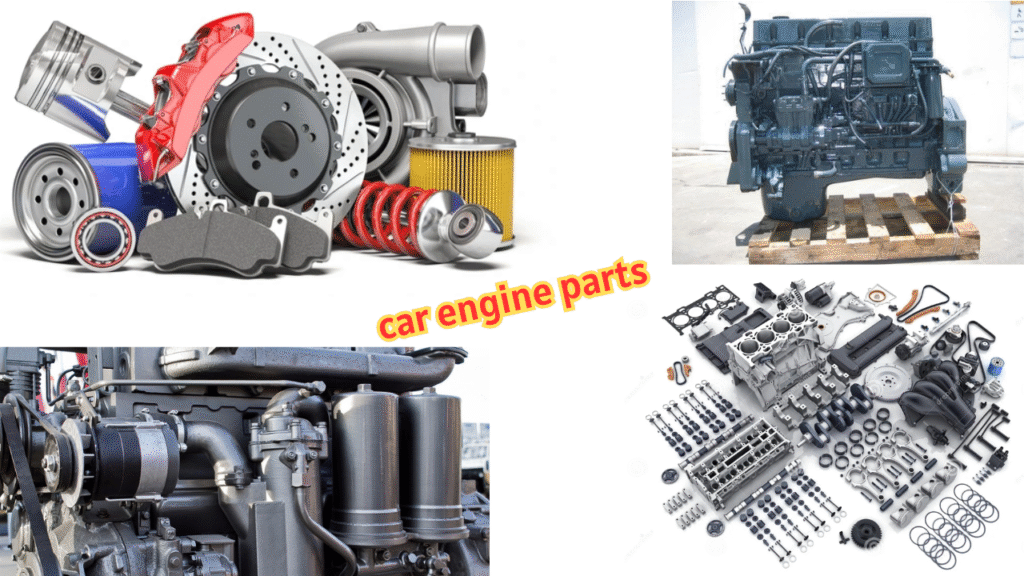

The car engine is the beating heart of any vehicle — a complex combination of precision engineering and advanced technology that converts fuel into motion. Understanding car engine parts is essential not only for automobile enthusiasts but also for every car owner who wants to maintain their vehicle’s health and performance.
In this detailed article, we’ll explore all the major and minor engine parts, their functions, types, and how they work together to keep your car running smoothly.
What Is a Car Engine?
A car engine is a mechanical device that converts fuel (usually petrol or diesel) into motion through a process called internal combustion. Inside the engine, air and fuel mix together and ignite under controlled conditions, creating energy that moves pistons up and down. This motion ultimately powers the wheels through a series of connected parts.

The internal combustion engine (ICE) remains the most widely used type, though electric and hybrid engines are gaining popularity.
Main Types of Car Engines
Before we dive into the individual parts, let’s look at the main types of engines found in modern cars:
- Inline Engine (Straight Engine): Cylinders are arranged in a straight line. Common in smaller cars.
- V-Type Engine: Cylinders are set in two angled banks forming a “V” shape. Found in powerful cars and sports models.
- Flat (Boxer) Engine: Cylinders are placed horizontally opposite each other. Used in Porsche and Subaru cars.
- Electric Motor (in EVs): Instead of fuel combustion, electricity powers the motion.
Each of these engines contains the same essential components, though their arrangement may differ.
Major Car Engine Parts and Their Functions
Let’s break down the main parts of a car engine and understand their roles.
Engine Block
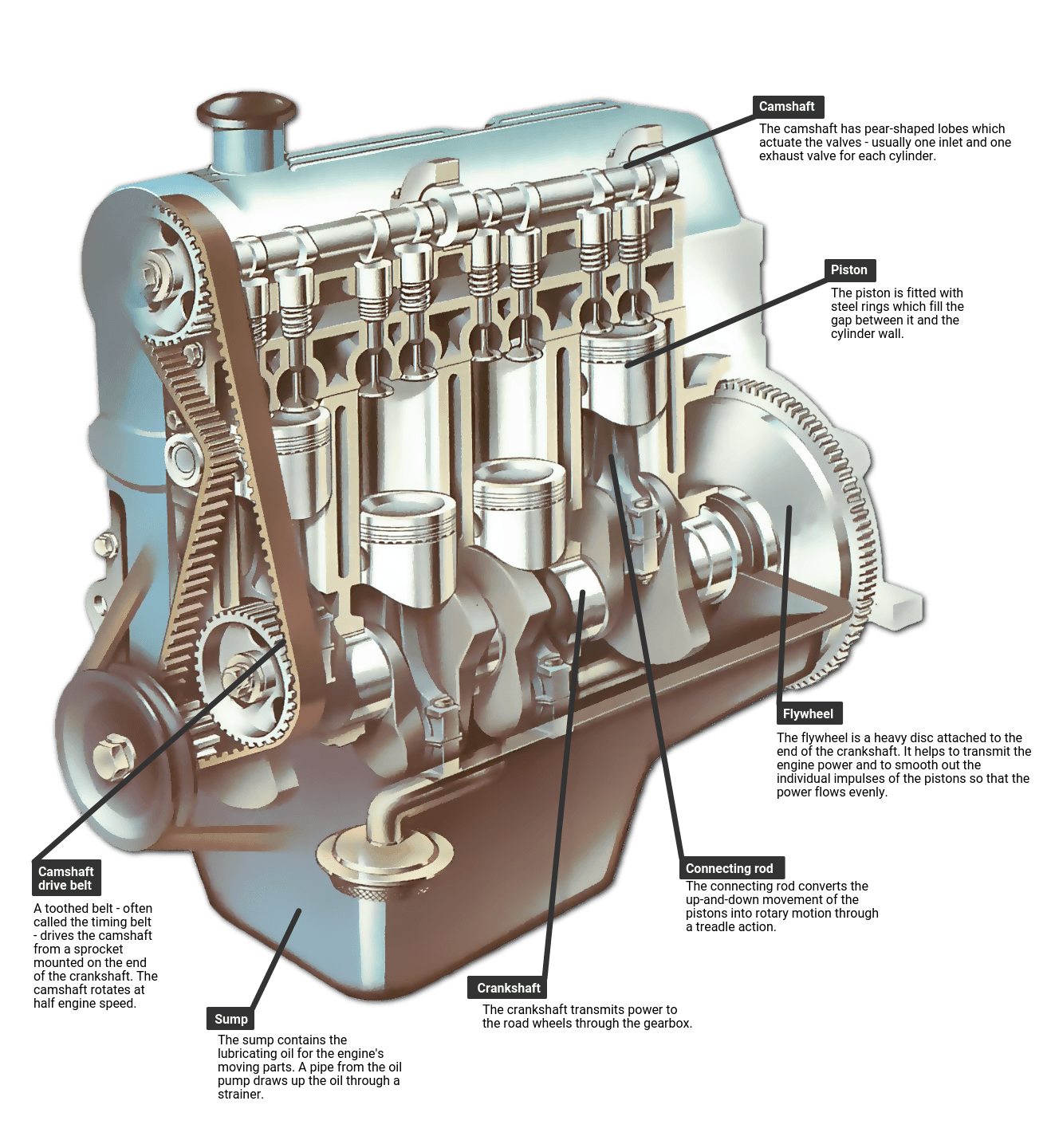
The engine block is the foundation of the entire engine. It houses major components like cylinders, pistons, and crankshaft. Made of cast iron or aluminum alloy, the block is designed to withstand extreme pressure and temperature.
- Function: It serves as the structural framework of the engine.
- Fun Fact: The number of cylinders in the block (e.g., 4, 6, or 8) determines the engine’s power and smoothness.
Cylinders
Cylinders are hollow tubes inside the engine block where the combustion process takes place.
- Function: Each cylinder hosts a piston that moves up and down during combustion.
- Types: Single-cylinder and multi-cylinder engines (e.g., four-cylinder, six-cylinder, etc.)
More cylinders generally mean more power and smoother performance.
Pistons
The piston moves up and down inside the cylinder, converting the force of burning fuel into mechanical motion.
- Material: Usually made from lightweight aluminum alloy.
- Function: The piston compresses the air-fuel mixture and transmits force to the crankshaft through the connecting rod.
Connecting Rod
This rod connects the piston to the crankshaft and transfers motion.
- Function: Converts the linear movement of the piston into rotational motion of the crankshaft.
- Material: Made from high-strength steel or titanium.

Crankshaft
The crankshaft plays a central role in turning engine energy into usable motion.
- Function: Converts the up-down motion of pistons into rotational power.
- Location: Positioned at the bottom of the engine block.
- Fun Fact: It’s one of the heaviest parts of the engine due to its strength requirements.
Camshaft
The camshaft controls the timing and operation of intake and exhaust valves.
- Function: Opens and closes the engine valves at precise intervals for air-fuel intake and exhaust release.
- Driven By: A timing belt or chain connected to the crankshaft.
Valves (Intake and Exhaust)
Engines have two types of valves — intake and exhaust.
- Intake Valve: Allows the air-fuel mixture into the cylinder.
- Exhaust Valve: Releases burnt gases after combustion.
Both must open and close at exact times for efficient engine operation.
Cylinder Head
The cylinder head sits above the engine block and seals the top of the cylinders.
- Function: Contains valves, spark plugs, and passages for air-fuel mixture and exhaust gases.
- Material: Aluminum or cast iron.
It also houses the camshaft in overhead cam engines.
Spark Plug
Found only in petrol engines, the spark plug ignites the air-fuel mixture inside the cylinder.
- Function: Produces an electric spark to start combustion.
- Replacement: Typically replaced every 30,000 to 50,000 km for best performance.
Diesel engines don’t use spark plugs — they rely on compression heat for ignition.
Fuel Injector or Carburetor
- Fuel Injector: Modern engines use injectors to deliver a precise amount of fuel into each cylinder.
- Carburetor: Older engines used carburetors to mix fuel and air before sending it to the cylinders.
Fuel injectors improve fuel efficiency and reduce emissions.
Timing Belt or Chain
This component synchronizes the crankshaft and camshaft movements.
- Function: Ensures valves open and close in perfect timing with piston motion.
- Maintenance Tip: Replace timing belts every 60,000–100,000 km to prevent major engine damage.
Oil Pan and Lubrication System
The oil pan is located at the bottom of the engine and stores lubricating oil.
- Function: Keeps all moving parts well-lubricated and reduces friction.
- Components: Oil pump, filter, and passages that distribute oil throughout the engine.
Without proper lubrication, the engine would seize due to excessive heat and friction.
Cooling System
Engines generate immense heat during operation. The cooling system prevents overheating.
- Main Parts: Radiator, water pump, coolant, thermostat, and hoses.
- Function: Circulates coolant around the engine to maintain an optimal temperature (around 90°C).
Exhaust System
After combustion, gases must be safely expelled. The exhaust system handles this process.
- Main Parts: Exhaust manifold, catalytic converter, muffler, and tailpipe.
- Function: Removes harmful gases and reduces engine noise.
- Bonus: Modern cars use catalytic converters to cut down pollution.
Intake Manifold
The intake manifold distributes air (or air-fuel mixture) to each cylinder.
- Function: Ensures equal airflow to maintain smooth combustion.
- Material: Usually aluminum or composite plastic.
Flywheel
The flywheel is a heavy disc connected to the crankshaft.
- Function: Stores rotational energy and smooths out the power strokes of the engine.
- Extra Role: Helps start the car when engaged by the starter motor.
Turbocharger (Optional)
Many modern cars include a turbocharger for improved power and efficiency.
- Function: Uses exhaust gases to spin a turbine that forces more air into the cylinders.
- Result: More air = more fuel = more power output.
Minor Car Engine Parts
Apart from the major components, several smaller yet essential parts support engine performance:
- Gaskets: Seal joints between parts to prevent leaks.
- Bearings: Allow smooth movement of rotating parts.
- Sensors: Monitor temperature, pressure, and oxygen levels for efficient operation.
- Belts and Pulleys: Drive accessories like alternators and air-conditioning compressors.
How All Engine Parts Work Together
The car engine follows a four-stroke cycle — Intake, Compression, Power, and Exhaust:
- Intake Stroke: Air-fuel mixture enters the cylinder.
- Compression Stroke: Piston compresses the mixture.
- Power Stroke: Spark plug ignites the mixture, pushing the piston down.
- Exhaust Stroke: Burnt gases exit through the exhaust valve.
All engine parts — from pistons to valves — move in perfect harmony during these cycles to produce continuous motion.
Common Engine Problems and Maintenance Tips
Even the best engines need care. Here are some common issues and maintenance practices:
- Overheating: Check coolant levels regularly.
- Oil Leakage: Replace worn gaskets and check oil seals.
- Poor Ignition: Clean or replace spark plugs.
- Unusual Noise: Could be due to worn bearings or timing belt issues.
- Regular Servicing: Always follow your car manufacturer’s maintenance schedule.
Modern Advancements in Car Engines
Today’s engines are smarter, cleaner, and more efficient than ever. Some new technologies include:
- Variable Valve Timing (VVT): Adjusts valve timing for better performance.
- Direct Fuel Injection: Improves fuel efficiency.
- Hybrid Systems: Combine electric motors with traditional engines.
- Start-Stop Systems: Automatically shut off the engine when idling to save fuel.

Why Understanding Engine Parts Matters
Knowing the basics of car engine parts helps in:
- Better Maintenance: Early detection of problems saves costly repairs.
- Improved Driving Habits: Understanding stress points reduces wear.
- Informed Purchases: Easier to evaluate car performance and specs.
Conclusion
Every part of a car engine, no matter how small, plays a crucial role in keeping your vehicle alive and running efficiently. From the mighty engine block to the precise spark plug, each component contributes to power, performance, and reliability.
By understanding how these engine parts work together, you can appreciate the marvel of engineering under your car’s hood — and ensure it stays healthy for years to come.